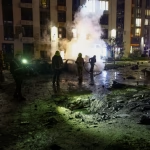
President Rodrigo Paz said he had ordered emergency measures to reopen blocked roads and restore the flow of goods and services.
In a post on X, Paz said the roadblocks were preventing people from working, studying, receiving medical care, and obtaining essential supplies.
The declaration came hours after the government reached an agreement with Bolivia’s main labor organization, the Central Obrera Boliviana (COB), in an effort to end the protests.
The blockades have caused shortages of food and medicine in parts of the country and disrupted transportation networks.
According to the National Chamber of Industries, economic losses linked to the unrest have reached approximately $3 billion.
Earlier this month, Paz signed legislation that expanded the government’s authority to implement emergency measures aimed at addressing public disorder.
The administration is also pursuing a financing agreement with the International Monetary Fund.
Government officials have said negotiations on a program worth about $3 billion are nearing completion.
Paz said the state of emergency was intended to restore normal economic activity rather than impose additional restrictions on citizens.
He added that the government remained open to dialogue with groups willing to engage in negotiations while efforts continue to reopen roads and stabilize supplies.
Bolivia has faced recurring political and economic tensions in recent years, with authorities seeking additional financing as the country grapples with fiscal pressures and supply shortages.