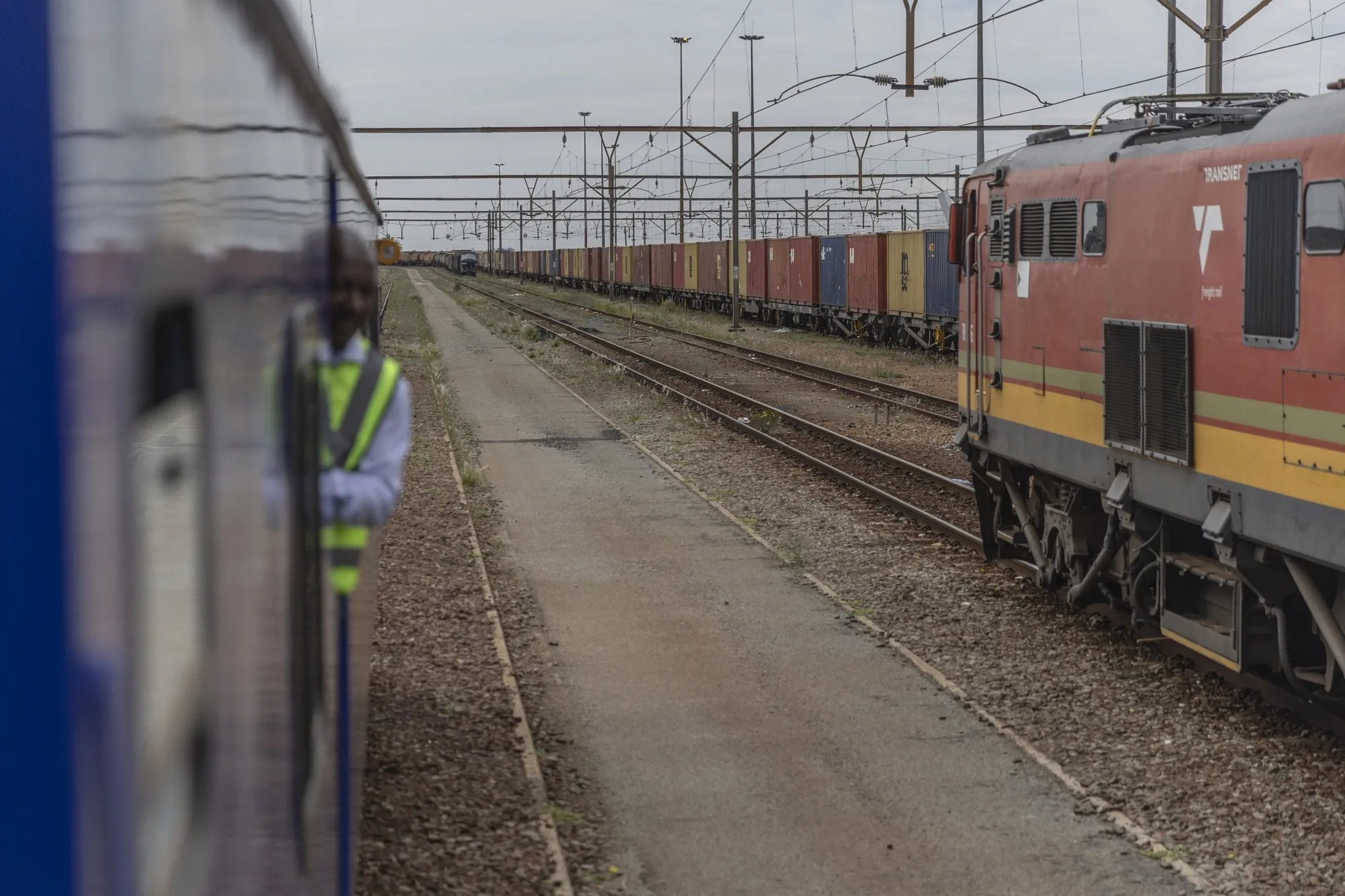
South Africa’s state transport firm Transnet SOC Ltd. granted 11 private companies concessions to operate trains on its freight-rail lines, part of a reform aimed at easing logistical bottlenecks that have constrained economic growth.
The names of the companies, all of which made a shortlist that was announced by the government in August, have yet to be announced.
The step is crucial to addressing South Africa’s logistics crisis and forms part of its new national rail policy, after coal exports fell to a 30-year low and iron ore shipments dropped to their weakest level in a decade as Transnet’s service deteriorated. Mining companies including Glencore Plc and Kumba Iron Ore Ltd. have struggled to move commodities to port, with disruptions also hitting industries such as automotive manufacturing and agriculture.
The enlistment of private partners is part of Transnet’s effort to boost rail volumes that have been stunted by persistent operational failures after years of mismanagement, underinvestment, theft and vandalism.
Private operators will be able to access 41 routes and six corridors used to move key commodities such as coal, chrome, manganese, fuel and other goods to ports for export.
The operators are expected to carry an additional 20 million tons of freight annually from the 2026-27 financial year, according to Transnet’s Rail Infrastructure Manager. Transnet would have to boost its haulage by about 70 million tons to meet a government target of moving 250 million tons of goods by rail by 2029.
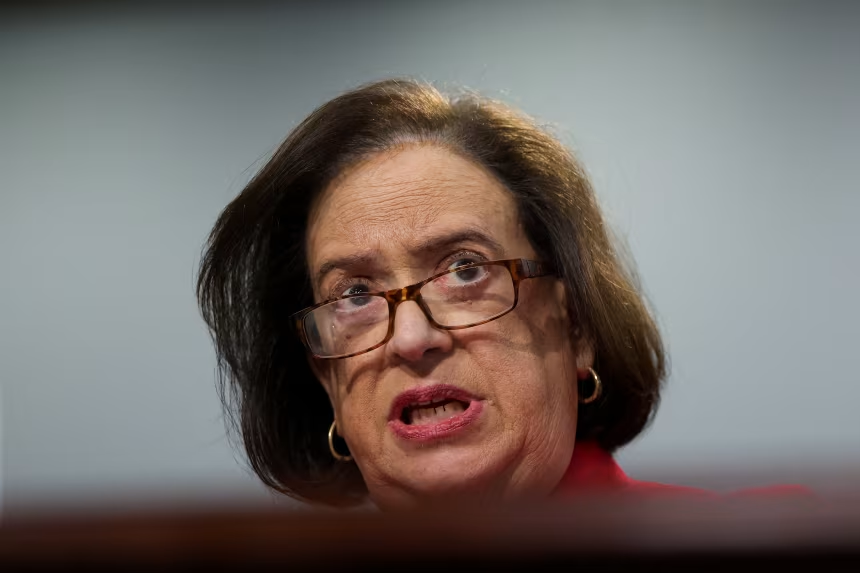
About 165 million tons of freight are moved per year on the rail network, while research suggests market demand is closer to 280 million tons, Transport Minister Barbara Creecy said last month.
South Africa’s eight commercial seaports handled 304 million tons of cargo in the 2025-26 financial year, up 4.2% from a year earlier, Transnet said in a statement on Tuesday.