




Volodymyr Zelensky told CNN on Thursday that there’s “not something personal” driving his latest estrangement from President Donald Trump.
Unfortunately for Ukraine’s wartime president, nothing could be further from the truth.
Everything about Trump’s presidency is personal.
Trump has substituted his own values — the flexing of dominance, the courting of strongmen and the pursuit of cash-spinning deals — for those that guided previous modern presidents as they secured democracy and faced down tyrants.
The result is that Zelensky now confronts one of the most critical — and hard to believe — questions about the war: Does Ukraine’s fate now depend not only on its capacity to fend off Russian aggression but also on the possibility that the US has joined Moscow’s camp?
Trump makes no secret of his personal distaste for Zelensky, who blamelessly helped precipitate his first impeachment. So it is no surprise that he’s adopted Russia’s demand for Ukraine to get a new president.
Trump’s personal political interests also shape US foreign policy: His diesel deal that could send billions of dollars to Russian President Vladimir Putin’s war machine came as he faced pressure to show midterm voters he can ease high fuel prices. So did his demand that Ukraine sheath one of its most effective tactics: attacks on Russian oil refineries.

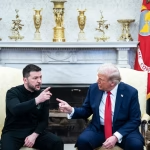
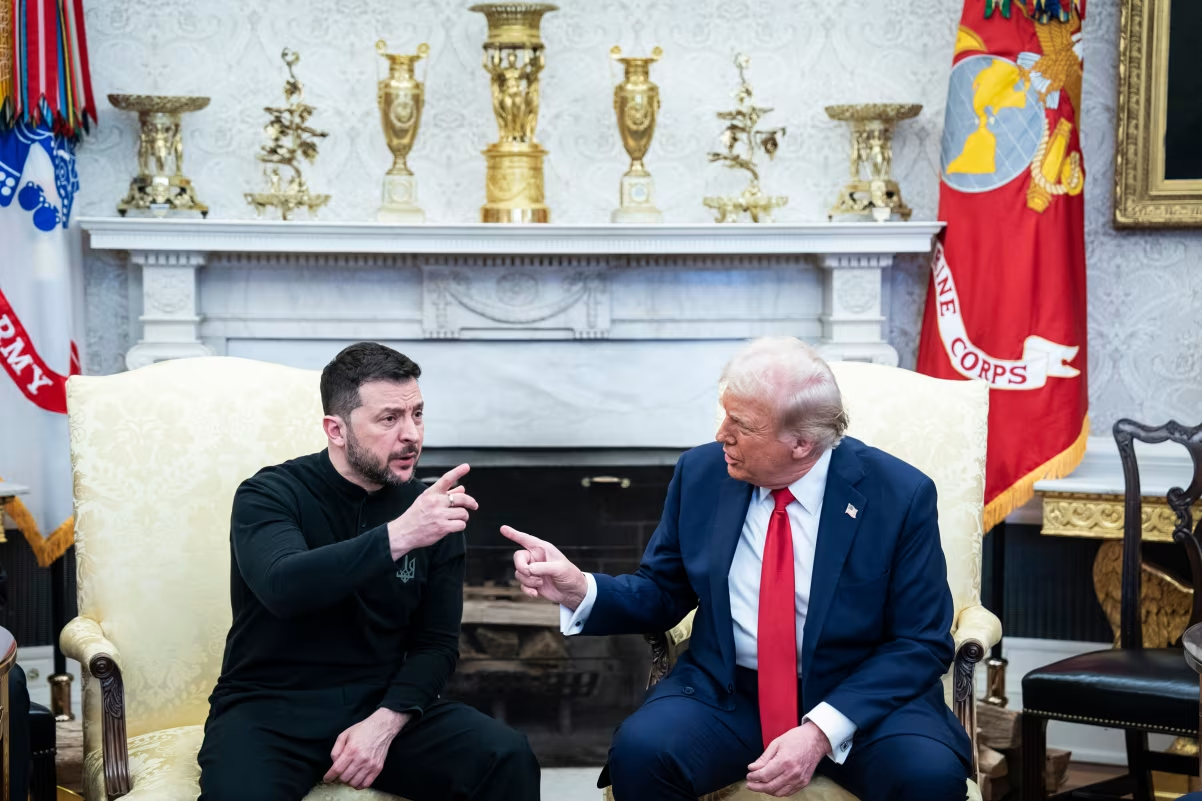
Ukrainian President Volodymyr Zelensky attends a lunch meeting with US President Donald Trump at the White House on October 17, 2025.Andrew Harnik/Getty Images/File
And Trump’s idiosyncratic political personality has long undermined peace efforts. His undimmed desire to please Putin has seen the US pressure Ukraine for concessions rather than Russia. Far from from favoring the invaded party, he’s rewarded the invader.
This pattern has become more concrete in recent weeks.
After rhetorically favoring Russia’s position for nearly two years, Trump has begun taking active steps to reinforce it. He invited Putin to the G20 summit; is considering a great powers meeting with the Russian leader and China’s Xi Jinping to try to end the war in Ukraine’s absence; and declines to send Patriot missiles to repel Russia’s aerial onslaught.
Ukraine says its access to a military version of Elon Musk’s Starlink network is still disrupted — meaning its drones are limited to lower speeds and thus less effective. It’s unclear who in the administration is to blame, though Trump insists it wasn’t him.
The spectacle of Trump envoy Steve Witkoff praising Putin — an accused war criminal — as a “humanitarian” to his face in St. Petersburg this week epitomized the White House’s moral expediency. Trump justified the praise as necessary to extract a US prisoner, Stephen Hubbard, from Russia.
But this accelerating strategy of offering carrot after carrot to the Russian leader has already demonstrably failed to end the war. Putin keeps contradicting Trump’s assurances that he wants peace with murderous missile and drone strikes on Ukraine that recently hit civilian buses and killed a 1-year-old in her stroller. Trump did not condemn such attacks.

Ukrainian President Volodymyr Zelensky during a meeting on October 14 in London, England.Henry Nicholls/WPA/Pool/Getty Images
‘We will survive’
His nation’s relentless pain was etched on Zelensky’s face during his interview with CNN’s Christiane Amanpour. While he went out of his way to avoid a new clash with Trump, he vowed never to compromise his principles or squander Ukraine’s sacrifice. Projecting dignity and resolve, he at times implicitly pleaded for a return to an American foreign policy built on traditional American values.
“We will survive and we will stay strong,” Zelensky said. “We will do everything to bring peace closer. But we will not give (a) chance (to) Putin to win this war.”
Zelensky told Amanpour he had no desire for personal rifts with Trump.
“It’s not about personalities,” he said. “It’s not something personal between me and President Trump.”

The Ukrainian leader has no option but to try to repair relations with the US president, since he’s the only world leader who could, if he wished, create pressure for a genuine peace process.
But he made clear his dismay at some of Trump’s recent moves, including the diesel deal and waiving of a new US sanctions law targeting Russia. “It will only give much more money for Putin for this war. And that’s why I’m against it,” Zelensky said. He signaled that even if he is rebuked for his rhetoric, with Ukraine’s freedom at stake, “I have to speak about it.”

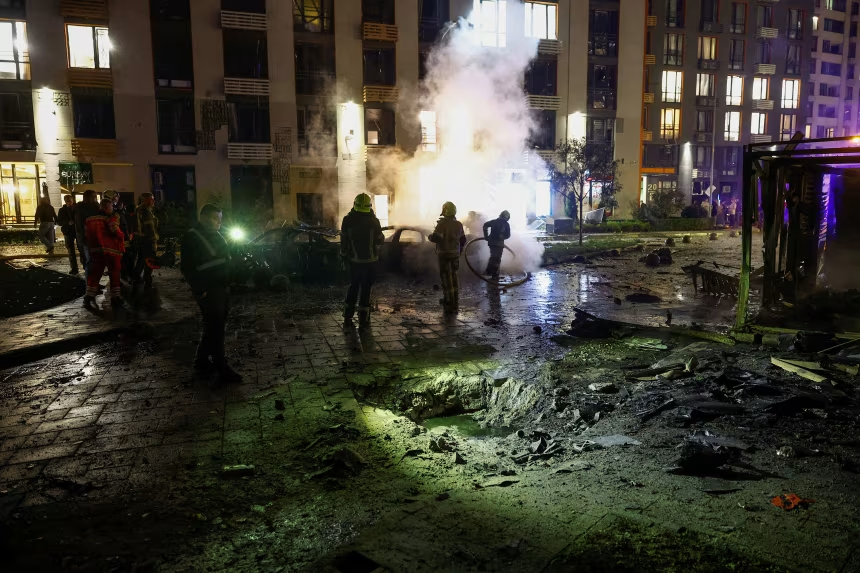
A rescue worker puts out a fire of a building destroyed after a Russian missile attack in Kyiv, Ukraine, on September 8.Alex Babenko/AP
‘Break us, destroy us, kill us’
The deepening quagmire poses two grave questions.
How will this war — which is only becoming more savage — ever end?
And what happens if it doesn’t? The conflict is growing even more dangerous as the Kremlin opens a new front of hybrid warfare against Ukraine’s European allies.
The dire possibilities leave no option but for Ukraine and its European allies to stay engaged, even if they mistrust Trump’s lopsided peace efforts.
Two minor developments this week that offered a scintilla of hope.
Russia agreed after Witkoff’s visit that Russia will join trilateral peace talks with Washington and Kyiv. And Zelensky reiterated a proposal to freeze current frontlines in a bid to spur a ceasefire and diplomacy.
These are hardly breakthroughs. The technical talks Russia has agreed to attend won’t take place until mid-November — so weeks of killing lie ahead. At best they will lead to an extended diplomatic process: Russia traditionally fights while it talks.
And Zelensky has in the past offered multiple formulations for ceasefires and diplomatic openings and initiatives to end the war, all of which Putin has ignored. There is no indication that Ukraine’s latest inducements will tempt him.
Still, hopes that current tensions between Ukraine and the US will not thwart some diplomacy are bolstered by the way previous blowups between Zelensky and Trump have ebbed over time, amid feverish European diplomacy to close the gaps. And US officials said talks in Norway with Zelensky and European partners this week had made progress and created momentum for the trilateral talks.

Ukraine’s President Volodymyr Zelensky, Norway’s Prime Minister Jonas Gahr Store and Finland’s President Alexander Stubb deliver a joint news conference on October 20, in Oslo, Norway.Jonathan Nackstrand/AFP/Getty Images
The general formula for any peace deal has been clear for years. It would entail a truce that would likely see Russia keep the spoils of its land grabs; US and/or European security guarantees for Kyiv; plans for a vast post-war reconstruction program for Ukraine; and a framework regarding NATO-Russian relations in Europe.
But Putin has shown no sign he’ll accept anything less than his maximal demands. And why would he, when Trump keeps offering him concessions?
Russia is seeking to negotiate the ceding of strategic territory in Ukraine’s eastern Donbas region that its troops failed to claim on the battlefield, despite horrendous casualties. Zelensky told CNN he could never accept such terms because “a lot of people died defending this land, defending our independence, our country.”
While Trump keeps insisting Putin wants a deal, Zelensky arguably has a more realistic view of his adversary’s aspirations. “Putin is playing, you know, he’s a player,” he said. “It’s a pity because he plays with the lives of other people.” He said Putin’s goal is to “break us, destroy us, kill us.”
But Ukraine’s living hell, and the growing possibility that the war could burst its borders mean there’s no option but to once again test Putin’s intent.
That means dealing with Trump’s temperament, grievances and personal goals.
Zelensky cannot let personalities get in the way.