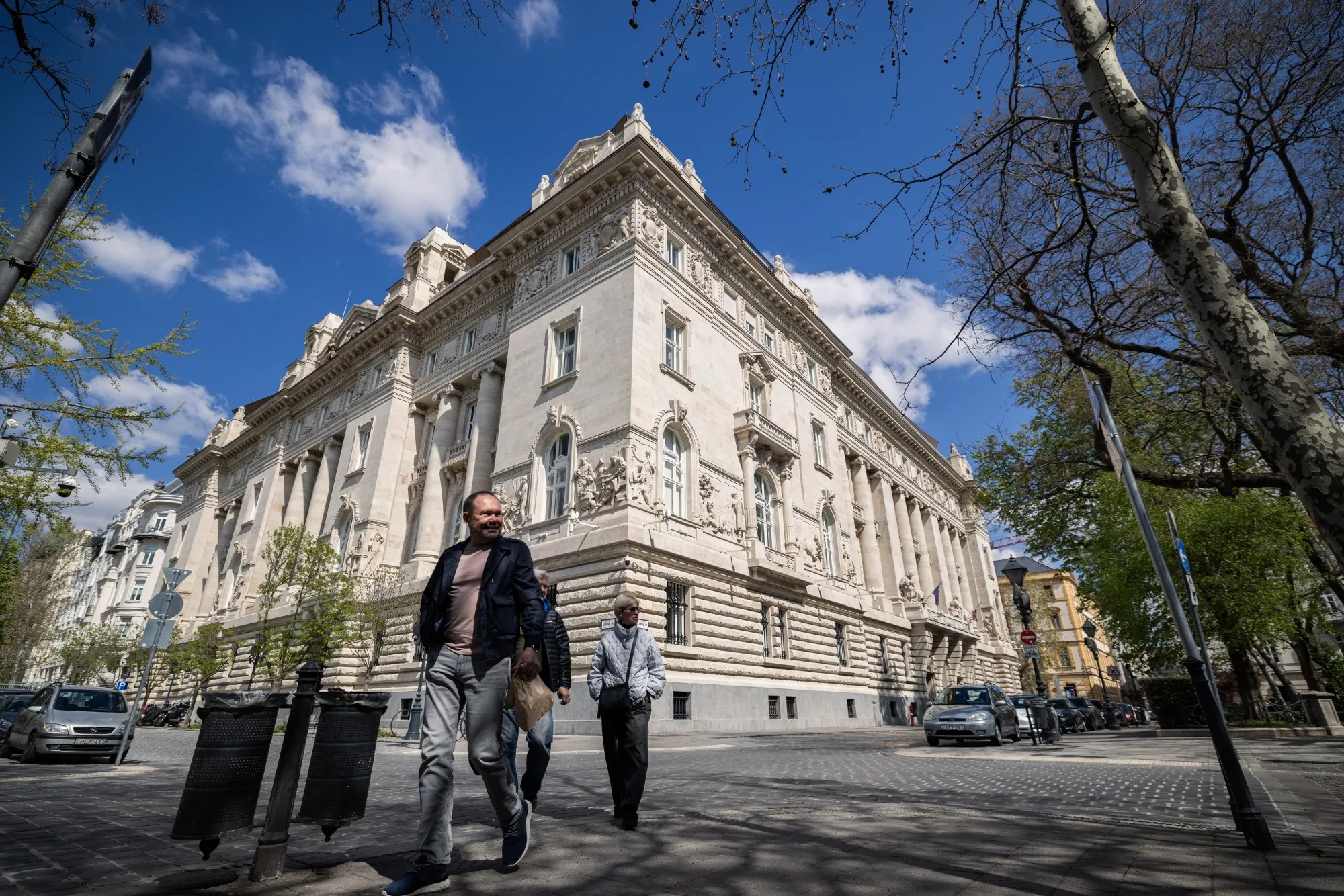
The forint weakened after the Hungarian central bank unexpectedly lowered the interest rate on its foreign-currency swaps following one of the biggest emerging-market currency rallies this year.
The move, which takes the implied rate offered on foreign-currency swaps down to 5.25% from 5.75%, is testing investors as the National Bank of Hungary looks for ways to limit the gains of the forint, which appreciated as much as 10% since lows hit in March.
The bank cited “improving market and liquidity conditions” on Wednesday. The forint weakened as much as 0.6% against the euro.
“The purpose of the instrument is to serve as a back-up option on the FX-swap market, thereby ensuring the effective interest rate transmission,” the central bank said in a statement. The new pricing, at 100 basis points below the base rate, matches the conditions the central bank had offered on such instruments before December 2024.
Hungary’s bonds and currency have staged one of the biggest emerging-market rallies this year as Peter Magyar took over as premier, pledging a radical shift in economic policies after Viktor Orban’s 16 years in power. Planned steps include reviving economic growth, cutting the budget deficit and preparing for euro adoption.
The FX swap move “does not imply any changes in the strict and careful monetary policy stance,” the central bank said, adding that it will allow “greater room for market-based developments to prevail.”
At the same time, Deputy Governor Zoltan Kurali told Bloomberg last week that the forint’s gains may lower the inflation path and provide “room to maneuver” on interest rates when new price-growth projections are published in June.
Read More: Hungary Looks to June for Potential Rate Move on Strong Forint
Hungary’s central bank has been cautious about the timing for resuming cuts to the 6.25% key interest rate, the second-highest benchmark in the European Union after Romania. It’s far higher than regional peers Czech Republic and Poland, whose levels are at 3.5% and 3.75%, respectively.
New Finance Minister Andras Karman on Tuesday vowed to tap frozen European Union funding within months and to meet all criteria for euro adoption within four years. Karman’s message was “exactly what the market wants to hear,” keeping the Hungarian market in a bullish mode, ING Bank strategist Frantisek Taborsky said in a note.
At the same time, Karman said the government would prefer to see that rally translated into even cheaper financing costs rather than an excessively strong currency.