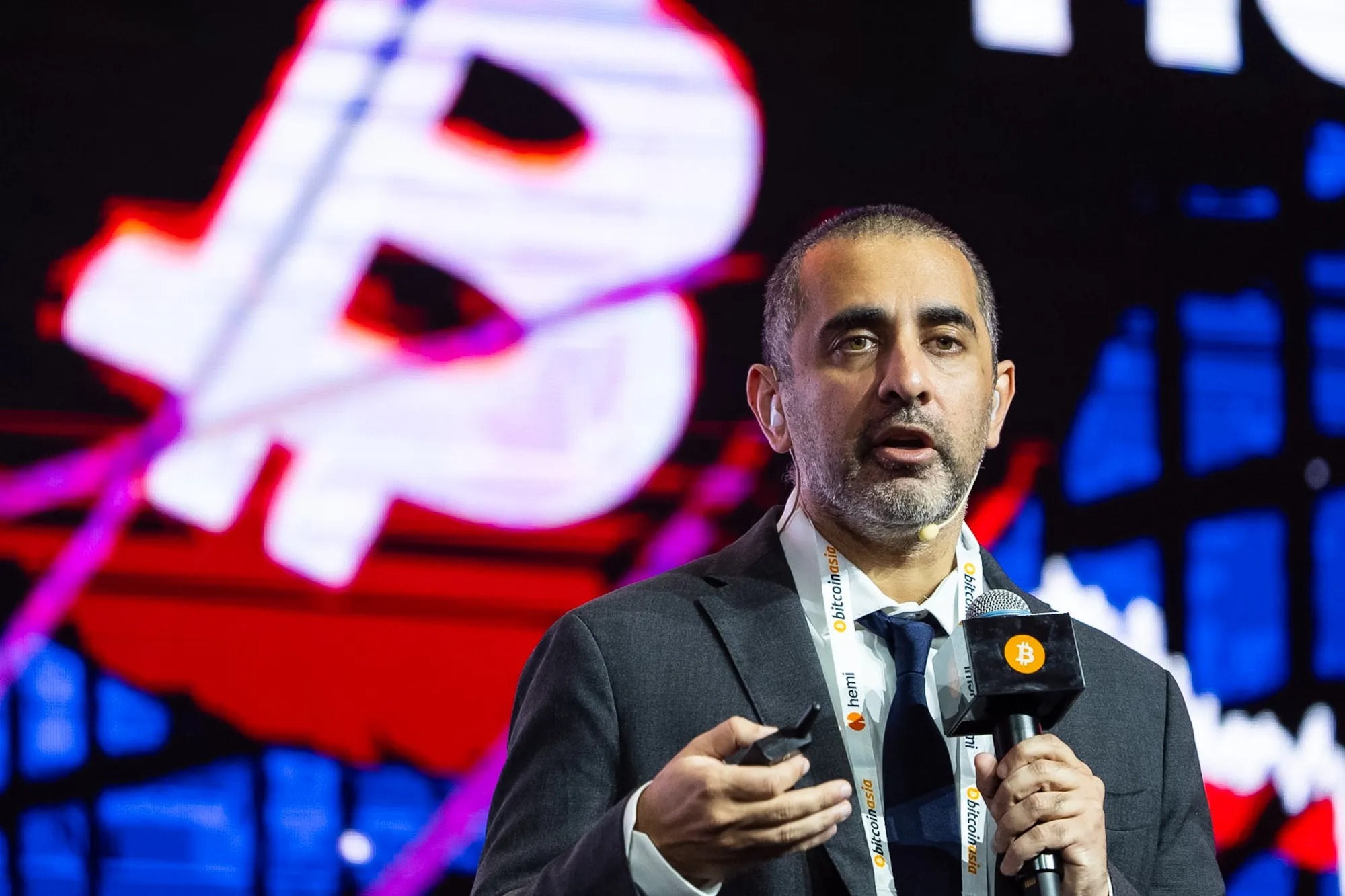
Serial tech investor Balaji Srinivasan is attempting to forge closer ties to politicians in Malaysia, wooing them with a showcase of his startup school project and calling for policies that would support it.
According to people present at closed door meetings last month, the former Coinbase Global Inc. executive asked officials including Minister of Digital Gobind Singh Deo to consider a tighter-knit relationship between the government and his Network School, which he’s positioned as a means to bring world-class tech talent to the Southeast Asian nation.
Srinivasan also presented a remodeled prototype of Malaysia’s visa application platform and floated the idea of fast-track visas for Network School residents that would permit longer stays than tourist passes allow, said the people, who asked not to be identified because some details of the meetings were private.
“The discussions were broadly around digital economy opportunities, AI, emerging technologies, digital finance and cross-border ecosystem development,” said Puan Chan Cheong, co-founder of Aurion Group, an investment advisory firm in Malaysia that builds AI-powered financial intelligence systems. He attended the meetings and added they were “constructive and exploratory in nature.”
Crypto has become a powerful lobbying force in recent years. The industry raised hundreds of millions of dollars to help US President Donald Trump and crypto-friendly congressional candidates get elected in 2024. In April, Reform UK leader Nigel Farage was accused of breaking parliamentary rules after he acknowledged receiving a large private payment from crypto investor Christopher Harborne.
Launched by Srinivasan in 2024, the Network School is an ambitious bid to bring the former Coinbase chief technology officer’s ideas to life. In his 2022 book, The Network State: How To Start a New Country, Srinivasan describes communities capable of crowdfunding territory around the world and eventually gaining “diplomatic recognition from pre-existing states.”
A failed Chinese real estate development called Forest City, the reclaimed island in the Malaysian state of Johor, has become Srinivasan’s ground zero, luring hundreds of tech entrepreneurs to live and work together.
On April 17, the date of the meetings, Gobind visited the site and was pictured shaking hands with a robot. He also posed alongside Srinivasan for photos and listened to presentations from crypto developers, including teams from Base, a division of Coinbase, and another group focused on Solana, a blockchain.
It appeared Gobind initially came away impressed. “What I saw reaffirmed Malaysia’s position as a rising destination for global tech talent,” he wrote in a social media post shortly after the visit, which featured pictures of him touring the school’s facilities, including its state-of-the-art gym.
Later, however, he deleted the post. It isn’t clear why, but his comments had drawn backlash on social media, with some people questioning why a politician would endorse a project whose founder has written extensively about how to use digital tools to create new, decentralized states.
Embracing Crypto
When Srinivasan first unveiled his Malaysian project in an August 2024 blog post, he said it would be based on a “a beautiful island near Singapore.” That island was home to Forest City, a beleaguered mega-project that was envisaged as a $100 billion metropolis but has instead been labeled a “ghost city” with far too few inhabitants to fill its vast tower blocks.
Srinivasan’s efforts have enlivened the place to some degree. Network School has hosted renowned tech speakers, including Ethereum co-founder Vitalik Buterin and longevity guru Bryan Johnson.
Lee Ting Han, executive councilor for investments in Johor, told Bloomberg News mid-last year that the school had brought “energy” to the area that had been missing. He didn’t comment on Gobind’s visit.
Earlier in 2025, Prime Minister Anwar Ibrahim signaled that Malaysia would embrace blockchain and cryptocurrencies. The country must “move away from outdated business models and the antiquated financial system,” he said after meeting with Binance Holdings Ltd. Co-Founder Changpeng Zhao and Abu Dhabi officials in January.
Anwar later welcomed continued discussion with agencies including the securities regulator, Bank Negara Malaysia and the Ministry of Digital to “explore ways to facilitate and promote responsible innovation.”
In December, Bloomberg News reported that a company owned by Ismail Ibrahim, the son of Malaysian King Sultan Ibrahim Iskandar of the Johor royal family, would launch a ringgit-pegged stablecoin. A few days later, the operator of AirAsia and the Malaysian unit of Standard Chartered Plc said they would explore a similar product.
Aurion’s Puan, who also founded Malaysia-listed Green Packet Bhd. in 2000, spent a month at the Network School last year with his son.
Tech entrepreneurs are increasingly looking for “environments that combine international connectivity, quality of life, regulatory openness and strong infrastructure,” he said in messages sent over WhatsApp.
Puan said Malaysia — especially Johor and Forest City — is well placed to benefit “because of its proximity to Singapore, improving digital infrastructure, competitive cost base and growing policy interest in digital economy initiatives.”